

In the world of underwear, the “wedgie” is the ultimate deterrent. It is a sensation that seemingly follows every underwear purchase. A lot of people seem to view the thong as a permanent wedgie, a garment designed to be intentionally uncomfortable.
However, if we look at the practicalities of fabric and motion, we discover a surprising truth: The thong was engineered to be the cure for the wedgie, not the cause of it. To understand why, we have to look at where the myth comes from.
A wedgie is caused by the excess material and positioning of traditional underwear. When you wear underwear with more coverage, you are wrapping a large amount of fabric over muscles and joints. As you walk, sit, or squat, the body changes shape, and that fabric gets pulled and pushed. All that material has nowhere to go but up. It bunches, folds, and eventually forces its way into the bum crack.
This is the classic wedgie, a thick, intrusive “wad” of material that shifts and pinches. A combination of too much fabric resting on an area with too much movement.
If someone has never worn a thong before, they might have experienced this “wedgie” feeling, know the discomfort of material moving in the crack, and rule out the possibility that a thong could be comfortable.
“How could a garment designed to be in your bum be comfortable?”
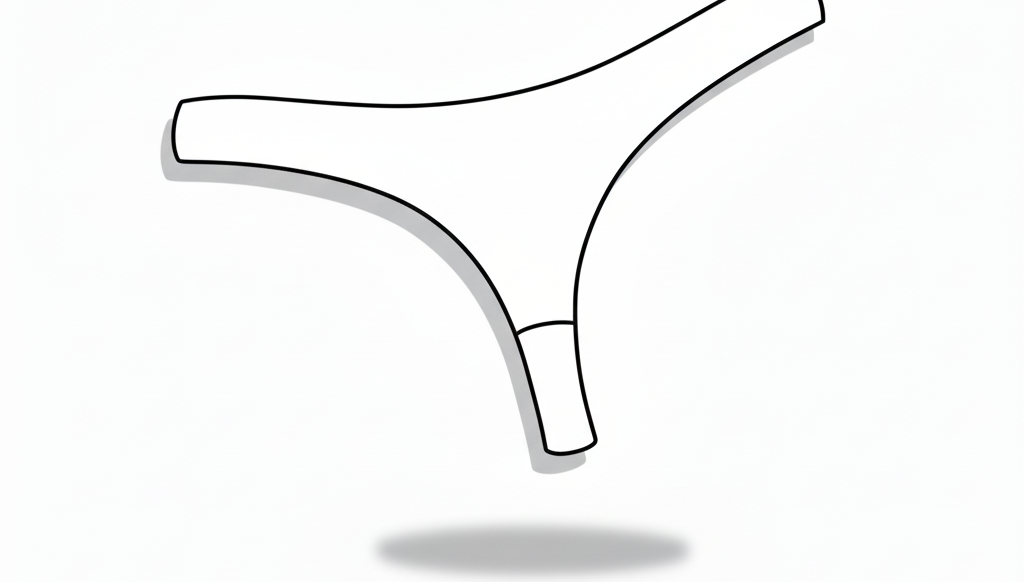
But thongs aren’t designed to try and float over the moving areas of the body. A thong is designed to sit between the cheeks. It’s an area that doesn’t move or change shape, so it doesn’t move or ride up. It is already exactly where it needs to be and keeps the garment static.
By removing most of the fabric from the back, the resulting strap ends up being a small amount of material sitting between your bottom. It is flat, narrow, and designed to sit flush against the skin. Unlike the random “wad” of material from traditional underwear, a thong strap is a single, smooth seam that follows the natural anatomical line of the body.
The irony is that thong wearers often choose the style specifically to avoid the wedgie feeling.
But what about the people who have tried wearing a thong and have found them uncomfortable, like a constant wedgie? There are a few potential reasons for this.
Firstly, people try a thong on, feel the back strap in their bum, and immediately take them off. For them, if it’s not instantly comfortable, then it’s clearly a flaw in the design
Your body needs time to adapt to the feeling of a thong. It’s a new sensation, but since the strap is thin and doesn’t move, it doesn’t take long for your body to stop sending alert signals to the brain. You quickly forget there is even material between your cheeks!
Secondly, if a thong still feels like a wedgie, it is usually a failure of sizing, not the design itself. Thong sizes don’t always match regular underwear sizing, so it’s worth checking reviews. If the size is too small, the tension of the strap digs in tightly against the body. If it’s too big, the strap can move around in the crack, so your brain won’t be able to tune the sensation out.
So, a thong sits between the cheeks, but doesn’t have the discomfort of a wedgie. When you give it time and find the right fit, it actually has the ability to “disappear”. People wearing underwear with fuller coverage spend their day “picking” at bunched fabric or subtly shifting to unstick their underwear from their legs. Thong wearers set the garment once in the morning and never touch it again.
The logic is clear: If you want to stop feeling your underwear, you need to wear less of it.
Leave a Reply