

If you ask the average man why he hasn’t tried a thong, the answer is almost always the same: “I don’t want a permanent wedgie.” It’s a logical fear. We’ve all experienced the discomfort of a pair of boxers migrating north, creating a bulky, irritating mess of folded cotton. We assume a thong is just that sensation, but on purpose, taking fabric and sticking it up your butt on purpose.
However, the truth about the back strap is far more technical and surprisingly much more comfortable than the memes suggest.
There are two types of wedgies that people want to avoid: either someone grabbing your underwear and pulling, or your underwear being subjected to the movement of the body, working their way into the bum crack. We’re not going to cover the first one; people shouldn’t just be grabbing your underwear. But no matter what underwear you are wearing, if someone gives you a wedgie, you’re going to be uncomfortable.
A movement-based wedgie is uncomfortable because not only are you feeling multiple layers of hemmed, folded, and bunched material being forced into a space where it doesn’t fit, but it also moves about. This creates pressure and friction. Even if you pull the material out and back where it belongs, as you continue to move, traditional underwear will gradually work their way back in.
So what does a thong do differently?
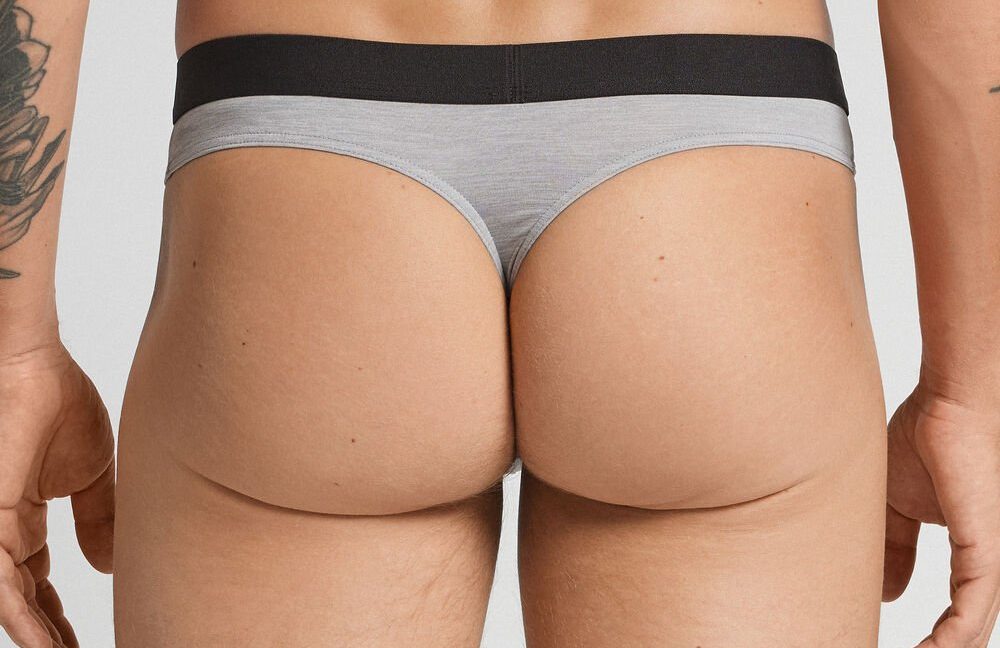
Well, it is designed to sit between the cheeks from the start. Now I know that sounds crazy, you’re choosing to stick material up where the sun doesn’t shine, but a thong’s back strap is a single, flat, narrow strip, rather than a big wad of fabric forcing its way up. It doesn’t push the bum apart; it sits in a natural gap.
The back strap is gently tensioned between the waistband and the pouch, keeping it flush against the skin. It sits between areas of movement, so it’s not subjected to the “ride up” forces. It’s already there, it is static, and it lets your body forget about it rather than fighting against it.
The biggest surprise with thongs is how quickly the strap disappears. Your skin is covered in sensory receptors, but they are designed to ignore constant feelings. Just as you don’t feel the watch on your wrist or the weight of your socks after a few minutes, the brain quickly stops registering the back strap because it doesn’t move about.
Because it is less material, there is actually less tactile input for your brain to process than the heavy leg bands and shifting fabric of traditional trunks. Within twenty minutes, you might feel “naked” rather than “wearing a strap.”
The back strap isn’t just there for aesthetics; it’s a crucial piece of engineering. In traditional underwear, the “support” is held in place by the tension of the leg holes. In a thong, the back strap acts as a central anchor.
This vertical tension provides a “lift” that briefs can’t match. It keeps the front pouch perfectly centred and secure, regardless of whether you’re running a marathon or sitting in a boardroom. The strap isn’t “intruding”, it’s providing the structural integrity that allows the front to do its job.
The back strap is a victim of its own appearance. It looks like a distraction, but in reality, it is the most efficient way to secure a garment while staying out of the way of your legs. It isn’t a constant wedgie in the back; it’s the key to a zero-friction, zero-bunching, and fully supported day.
Leave a Reply